Why it’s time to stop spreading/listening to misinformation & start understanding each other.
I’ve been seeing a lot of posts lately about addiction, recovery, & medication-assisted treatment (MAT). Sadly, a lot of what’s being shared, especially from some pain advocates & recovery influencers just isn’t fully true.
It’s time to have an honest conversation. Not one full of blame or division, but one rooted in facts, compassion, & understanding💜
What MAT Actually Is — & What It Isn’t
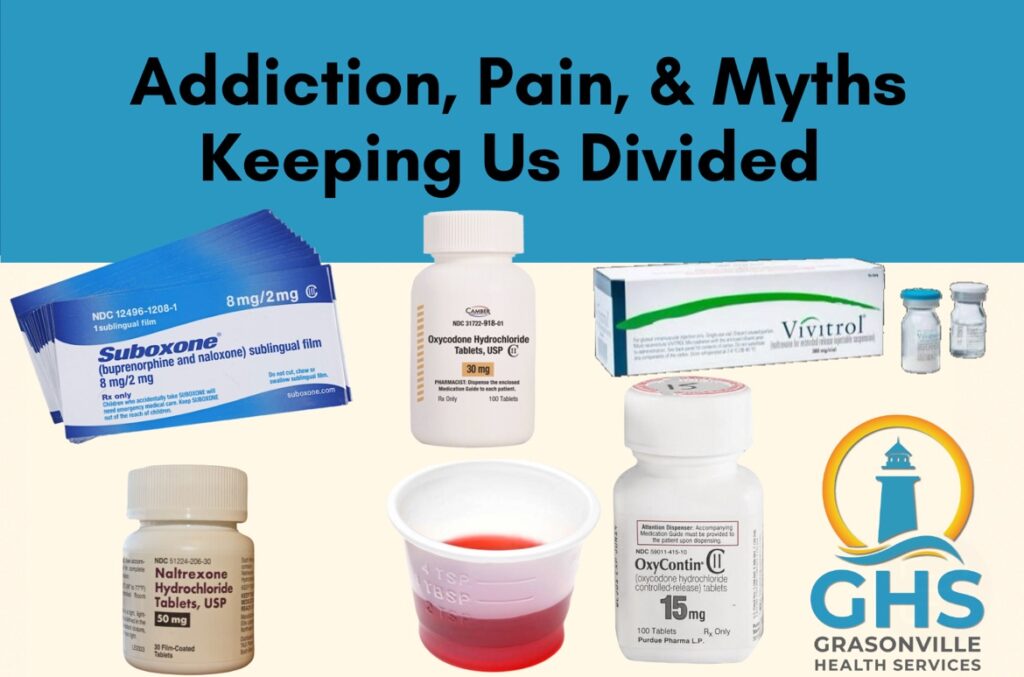
MAT is Medication Assisted Treatment, used in addiction & substance use disorders, where they’ll get a patient stable via a medication, & gradually taper them down doses, until they’ve been weaned off completely. We mainly hear of its use with opioids, & the 2 main medications we hear about are: Suboxone & Methadone.
Suboxone (buprenorphine/naloxone) & methadone are medications that help people stabilize from opioid use disorder (OUD). That’s what they’re legally approved to treat & that’s it.
While methadone can also be prescribed for pain in some cases, neither Suboxone nor methadone can legally be prescribed off-label, especially not for other addictions like for example, methamphetamine use, benzodiazepine dependence, cannabis use, alcohol use, etc.
These medications are controlled substances under federal DEA law, & there are strict limits on how & when they can be used. I’d argue they’re even more controlled than regular controlled substances.
If a prescribing provider were to write Suboxone or methadone for methamphetamine or benzodiazepine addiction without an opioid diagnosis, that would be illegal, not just “off-label.” These medications can NOT be written/used “off label,” either.
Not All Buprenorphine Is the Same
Here’s where it gets confusing for a lot of people: Suboxone’s main ingredient, buprenorphine, actually comes in a few different forms, (like many medications) & those different formulations are approved for different things.
Suboxone specifically combines buprenorphine + naloxone, & that specific combo is FDA-approved for opioid use disorder ONLY. But buprenorphine by itself is also used in several pain management formulations, including:
– Butrans® — a transdermal patch worn on the skin for 7 days that releases buprenorphine slowly for chronic pain.
– Belbuca® — a buccal film placed inside the cheek that’s also approved for long-term pain control.
– Buprenex® — an injectable form often used in hospital settings for acute or short-term pain.
– Subutex®* — another buprenorphine-only tablet, mainly used for opioid dependence during pregnancy or when someone can’t take naloxone.
Each of these formulations works differently because of how they’re absorbed, metabolized, & formulated. For example, Butrans delivers the medication through the skin over time, while Belbuca enters through the cheek lining. Those differences can change how quickly it takes effect, how long it lasts, & even how strong it feels.
So while yes, buprenorphine can be legally prescribed for pain, but only in those pain-specific forms. Suboxone itself cannot be legally prescribed for pain or for ANY non-opioid addiction/use disorder.
This is why it’s so important to understand what’s being talked about before spreading claims online: not all buprenorphine products are the same, & how they’re used medically depends heavily on the formulation.
Methadone — The Outlier
Methadone is a bit of an outlier in this whole conversation. Most medications are discussed by brand name, like Suboxone, Belbuca, or Butrans. But methadone is almost always referred to simply by its generic name, no matter what it’s used for.
And unlike Suboxone or other buprenorphine products, methadone has two very different legal pathways depending on why it’s prescribed:
When used for opioid use disorder (OUD), methadone can only be dispensed through a licensed opioid treatment program (OTP) like us here at Grasonville Health Services — more commonly known as a “methadone clinic.” It’s not something you can pick up at your local pharmacy for OUD/addiction treatment.
But when prescribed for pain management, methadone can be written by any DEA-registered prescriber & filled at a regular pharmacy, just like other opioids.
That’s part of why methadone confuses people: it’s the same drug, but different rules, depending on the diagnosis.
Methadone also works a little differently than Suboxone. It’s a full opioid agonist, meaning it fully activates opioid receptors in the brain, while buprenorphine is only a partial agonist. This is why methadone can be a better fit for some people with higher opioid tolerances or who haven’t stabilized well on Suboxone. But it also means methadone carries a higher risk of OD if misused/abused, which is why the regulations around it are so strict.
So What Is Used for Those Other Addictions?
Even though Suboxone & methadone aren’t options for non-opioid addictions, there are evidence-based treatments that can help:
– Alcohol Use Disorder (AUD) → Medications like Naltrexone* (oral ReVia or injectable Vivitrol), Acamprosate (Campral), & Disulfiram (Antabuse) have been shown to reduce cravings & relapse.
– Methamphetamine Use Disorder (MUD) → No FDA-approved medication yet, but behavioral therapy, contingency management, & ongoing research into combinations like bupropion + naltrexone show promise.
– Benzodiazepine Dependence → The safest, most effective treatment is a slow, medically supervised taper paired with therapy & strong support systems.
*Naltrexone: Oral vs Injectable
Naltrexone is special in that it comes in two forms that are FDA-approved for BOTH OUD & AUD:
ReVia® (oral tablet) → Taken daily.
Vivitrol® (extended-release injectable) → Monthly injection.
Both forms:
Block opioid receptors completely, so opioids won’t produce a high.
Are non-addictive & don’t cause withdrawal when discontinued.
Are options for people who prefer an antagonist approach rather than a partial/full agonist (like Suboxone or methadone).
This is another example of why understanding the different formulations matters. Addiction isn’t one-size-fits-all, & recovery isn’t either. What helps one person might not help another, & that’s ok! The key is access to options & compassion, not shame.
The Gray Area: Chronic Pain & the Fallout
Now let’s talk about chronic pain patients because this is where things get complicated, & it’s where a lot of the anger comes from.
I personally don’t believe anyone should be forced off a medication that’s working & not causing harm. I don’t know anybody who is. This goes for any medication, but especially those with chronic pain or mental health issues. Pain management is a form of healthcare, not a privilege. People deserve to live without being in constant agony, & for many, opioids are what make that possible.
Sadly, after the CDC & DEA tightened opioid prescribing guidelines, many pain patients were cut off: some abruptly, some completely. & yes, many were pushed to the streets, desperate & untreated. Some even lost their lives.
That’s not okay.
We should be able to talk about that truth without pointing fingers at people in recovery or on MAT. The other vulnerable population is not the enemy.
The Misinformation Problem
There’s a growing wave of influencers: from “pain patient advocates” to self-proclaimed “recovery purists,” who are spreading false information & turning people against each other. All in the name of engagement, which brings them money.
You’ve probably seen the types of posts:
– The ones who claim Suboxone is “just another drug,” & those on MAT aren’t “really in recovery.”
– The ones who insist methadone “☠️ more people than it saves.” (False)
– The ones who record people struggling on the streets & call it “awareness,” when really, it’s exploitation for clicks, which brings them money.
– The “12-step ONLY” voices who say you’re not “truly sober if you’re on MAT.”
– The pain patient advocates that blame “addicts” because of their medications becoming harder to get, etc.
That kind of judgment doesn’t save lives- it only pushes people away from help. There’s room for all paths in recovery. 12-step programs help many people, & that’s great. But so does MAT, harm reduction, & therapy. It’s not a competition. The recovery community should be united, not divided.
The Bigger Picture
What gets lost in all this noise is the truth: MAT saves lives. Harm reduction saves lives. & compassion saves lives.
We can believe in both responsible opioid prescribing & believe in the power of MAT medications for those who need them. We can advocate for pain patients & support people in recovery. We can fight stigma & demand better care. It’s not black & white. There’s a lot of gray in this world, especially the medical world, & that’s where real understanding lives.
The people you see on MAT, the ones carrying Narcan, the pain patients begging to be heard, & the ones just trying to make it through the day: they’re all human beings deserving of dignity & truth, not judgment & blame.
If we spent half as much time listening as we do arguing, we might actually get somewhere💜